client
Atlas Copco
year
'25
timeframe
3 Months
team
Designer, Project Lead, Business Analyst, Developers, Embedded Engineer.
Product Design
Mobile
IoT
The Scientific Vacuum Division (SVD) develops specialized vacuum equipment used in industrial environments where reliable operation and timely diagnostics are critical. During field visits, service and maintenance engineers need quick access to product information to understand equipment status and identify potential issues.
SVD Link was designed as a mobile application to enable direct access to diagnostic data from SVD products without relying on additional tools or manual checks.
As part of the MVP initiative, I worked end-to-end on the product experience — translating requirements into user flows, defining the interaction model, and designing the final UI aligned with the brand’s visual ecosystem in close collaboration with stakeholders.
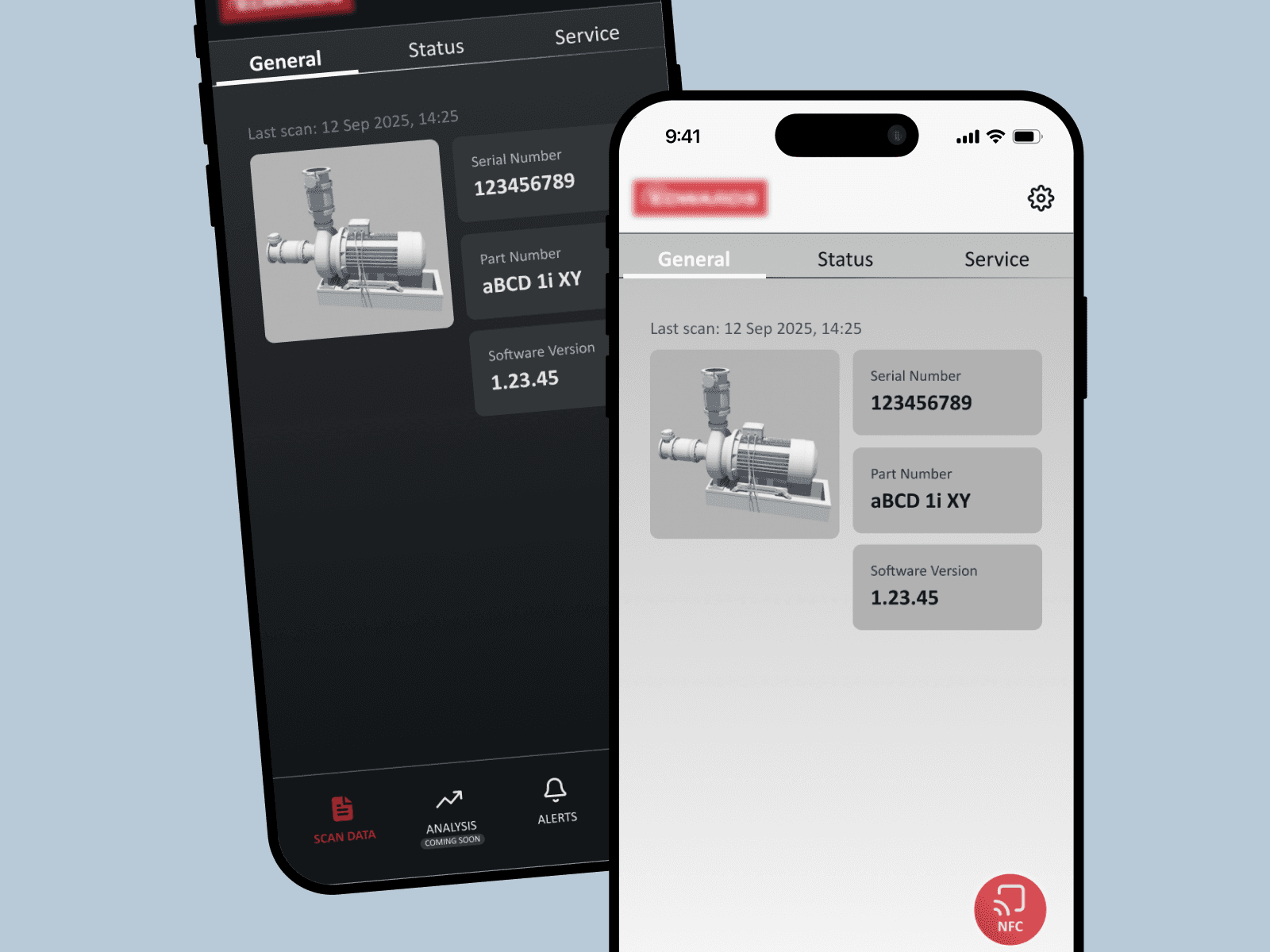
The project began with requirement discussions with stakeholders from the SVD, which helped define the initial scope and key constraints, mainly adherence to existing brand guidelines, consistence with the broader ecosystem and sleek-modern UI.
To better understand the operational context, I spoke with service engineer and domain experts. These conversations helped clarify how products are monitored and serviced in the field, the parameters engineers rely on for diagnostics, and how a mobile application could realistically support their workflow.
I explored similar diagnostic applications to understand common interaction patterns and expectations in technical environments. These explorations helped shape a simple and predictable interaction flow, which was reviewed and refined with stakeholders before moving into interface design.
With the interaction flow established, I explored multiple visual concepts aligned with their requirements.
Once a direction was selected, I established a structured design system, defining visual hierarchy, iconography, and reusable components to ensure consistency and scalability as the product evolved.
Designs were reviewed with stakeholders in weekly iterations, allowing individual features to be validated and implemented progressively during development.
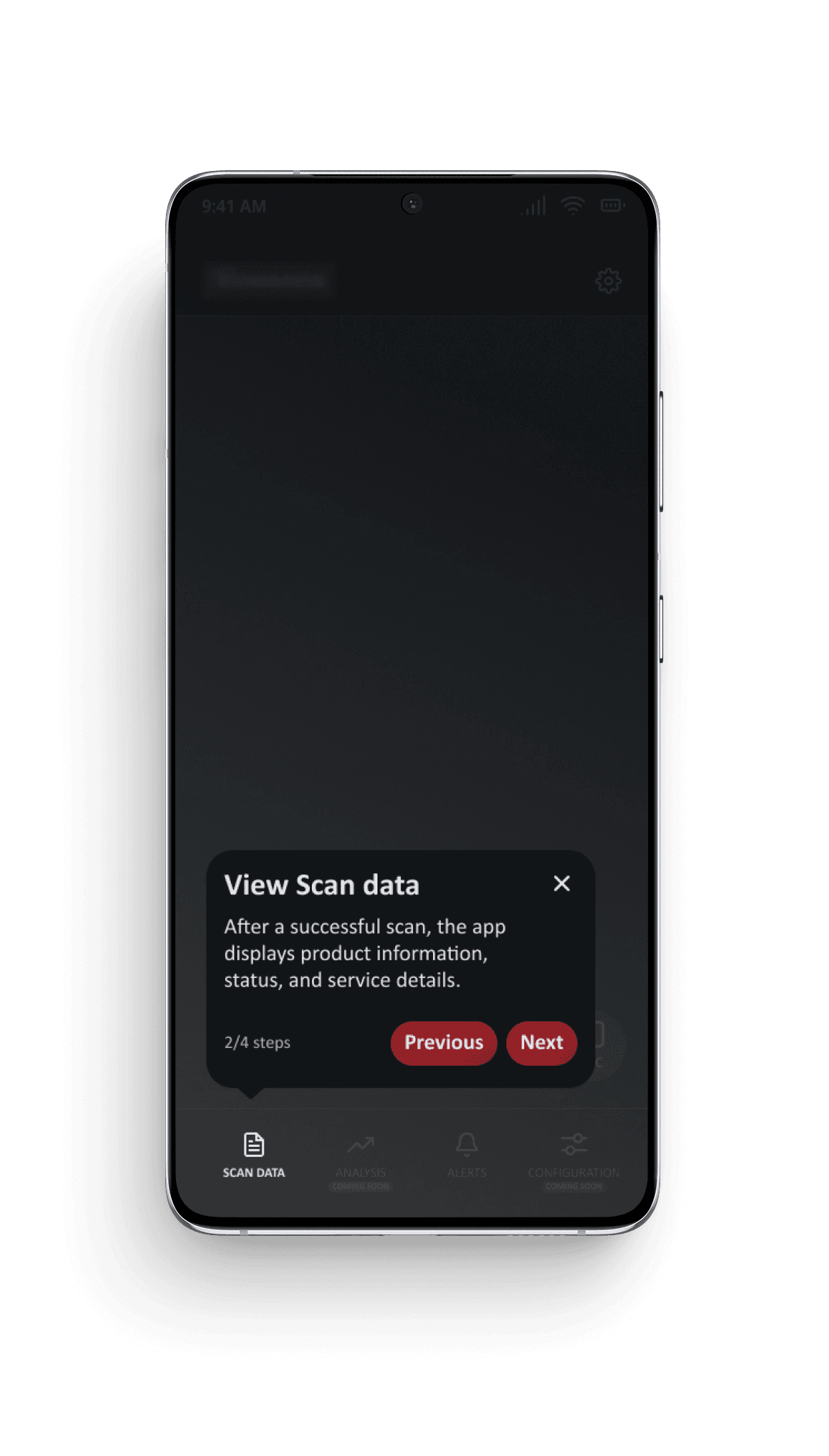
A short walkthrough helps first-time users understand the workflow, reducing uncertainty and ensuring users know what information will be retrieved after a successful scan.
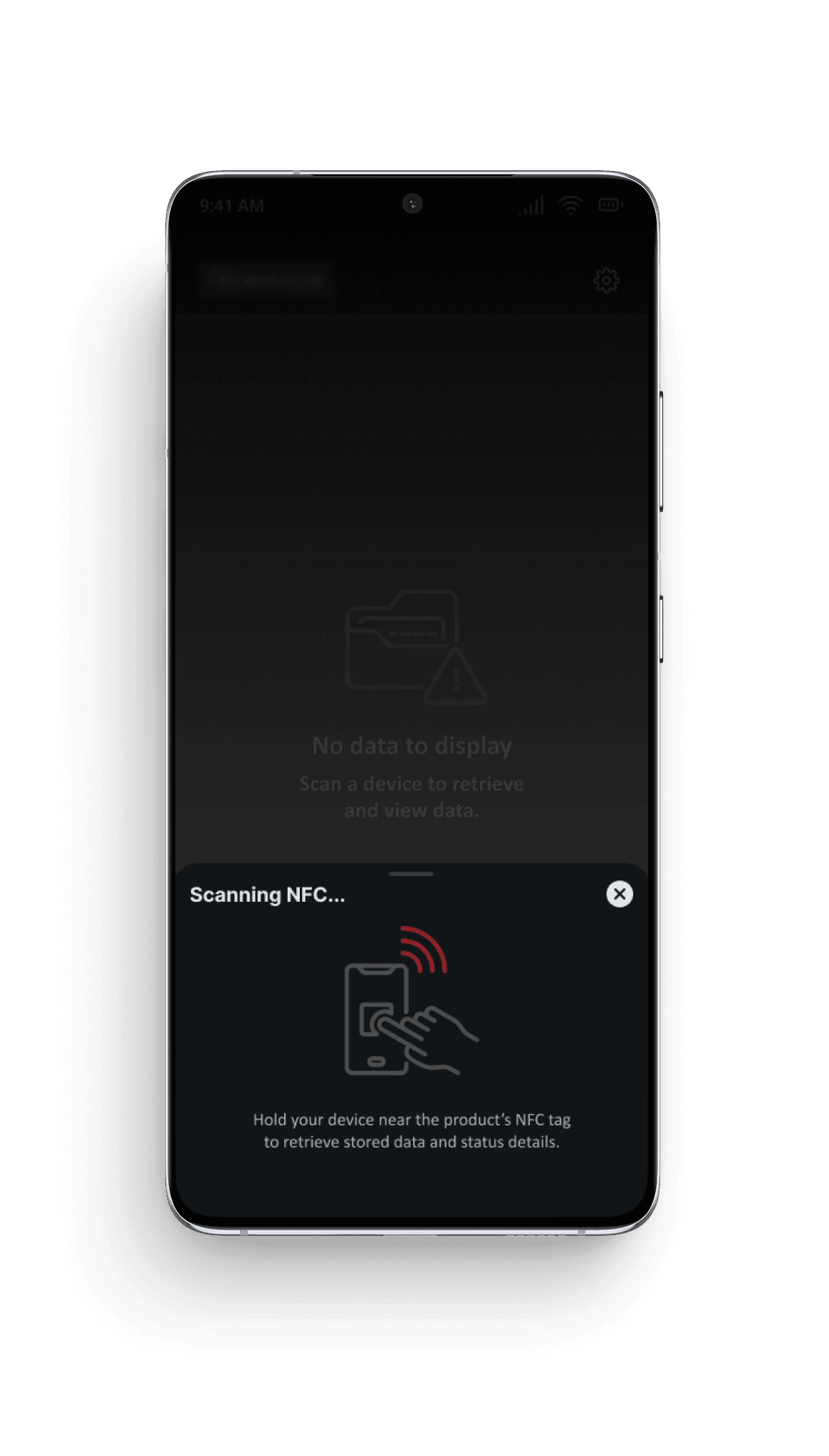
The scanning screen provides visual feedback during NFC detection. While the device can technically be tapped directly, the CTA introduces a small cue that helps prevent accidental scans.
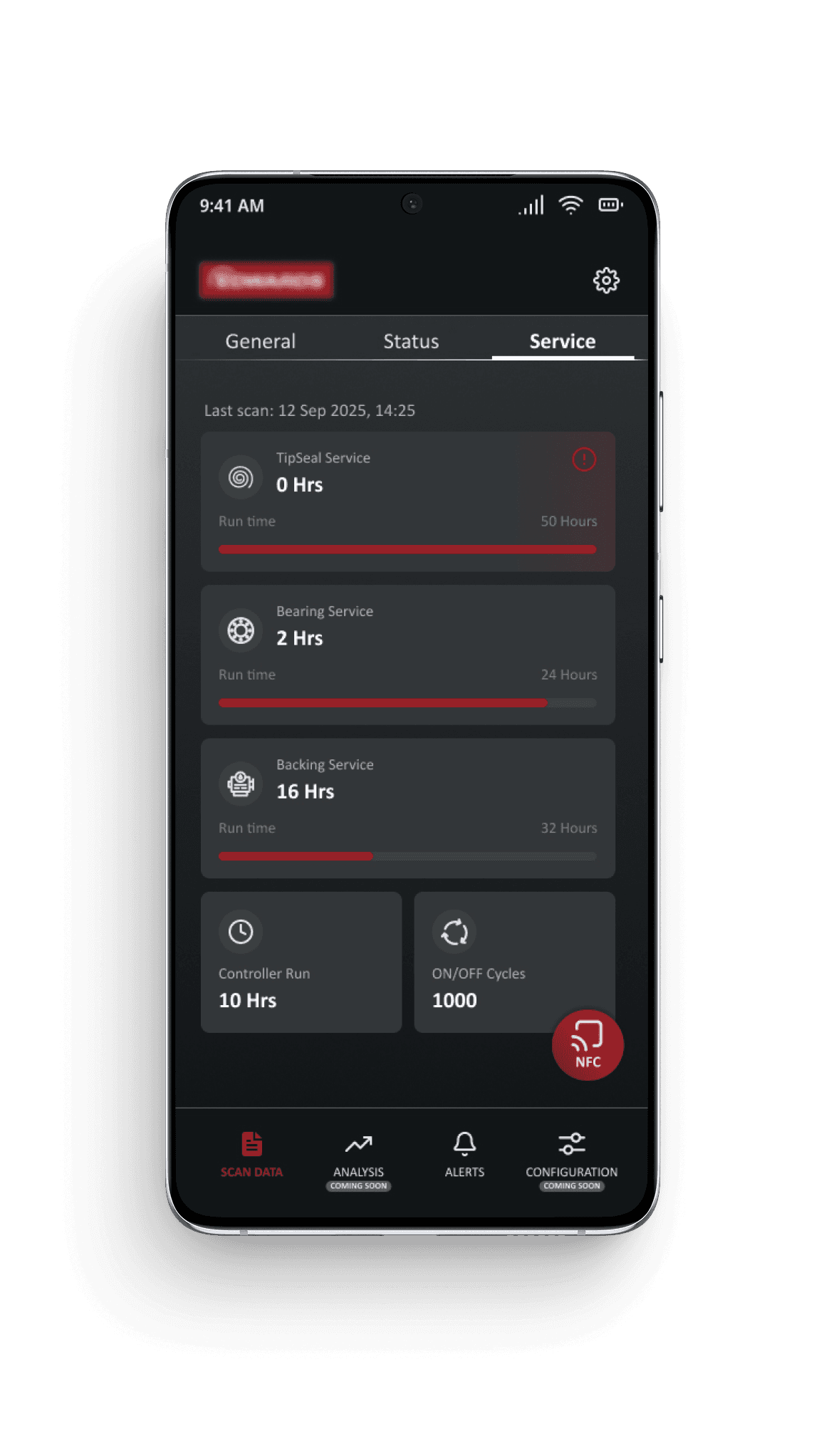
Retrieved data is organized into general, operational and service indicators, prioritizing the most critical information so engineers can quickly interpret.
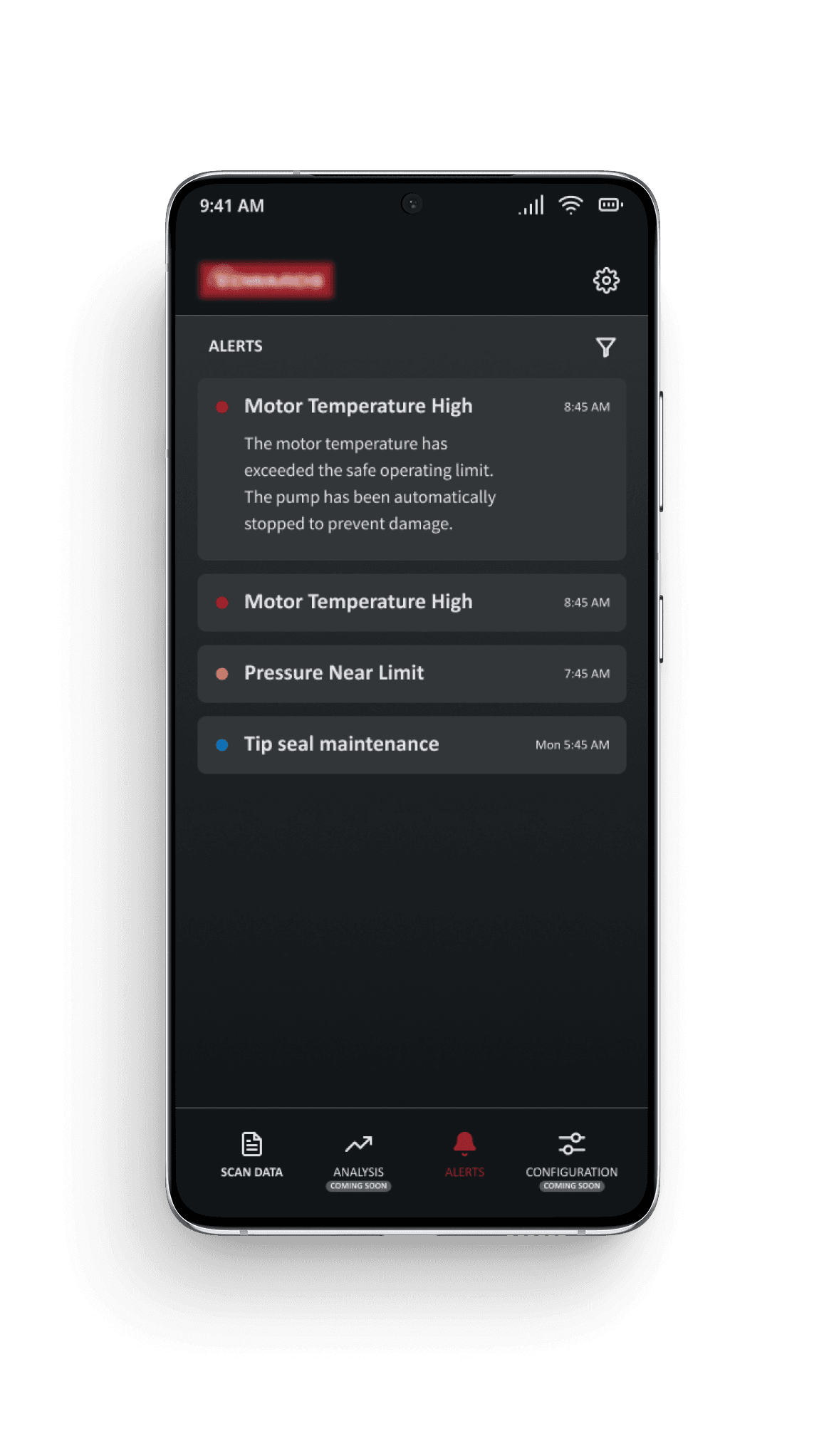
Alerts are organized by severity with clear visual cues to help engineers quickly identify abnormal conditions and prioritize action.
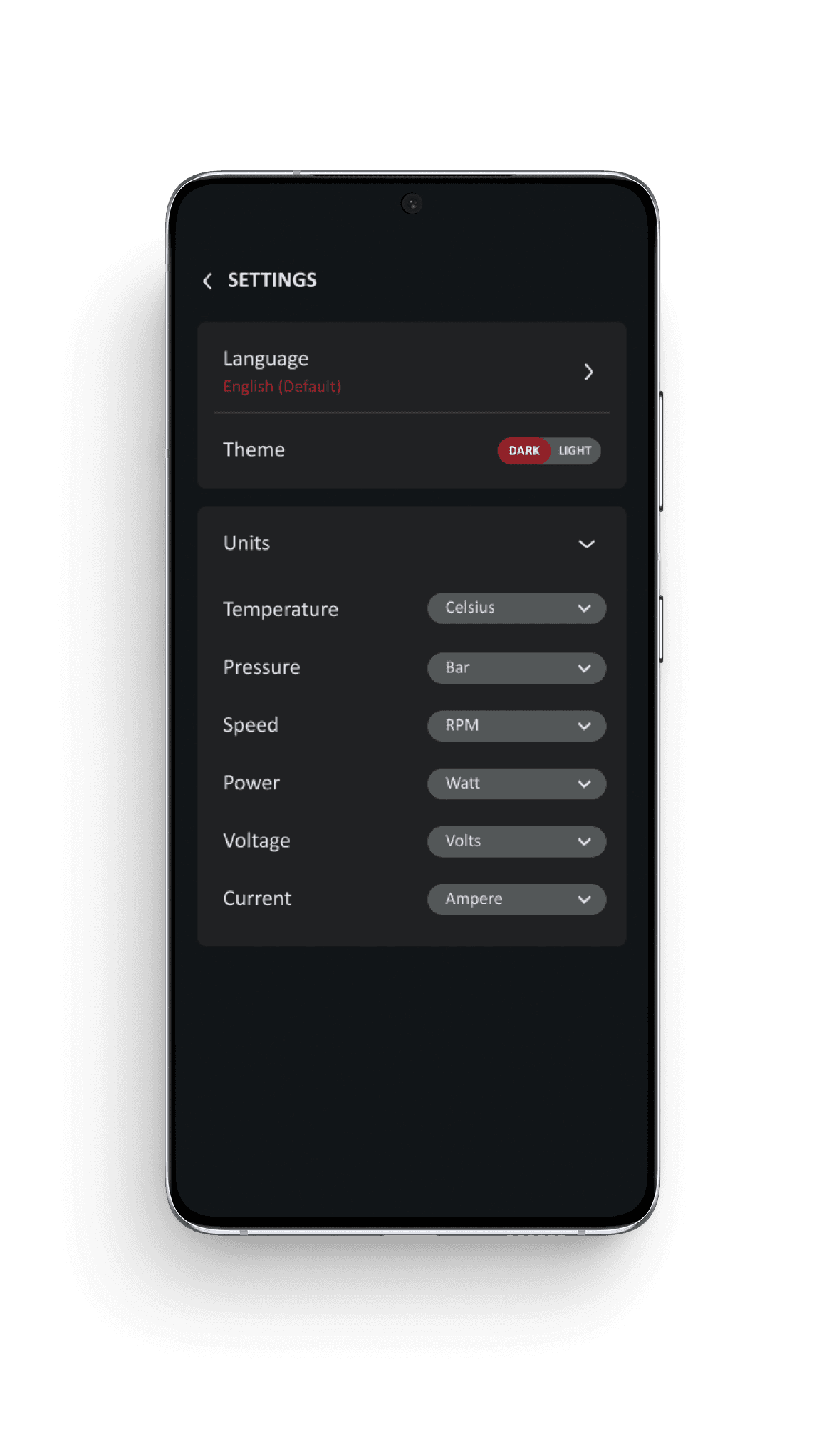
Settings allows engineers to customize measurement units and preferences, ensuring data aligns with the standards they work with.
• Initial release focused on a small set of essential features.
• Direct user interaction was limited, with feedback primarily coming from stakeholders.
• The collaborative process and the final design direction were well received by stakeholders, who appreciated the depth of exploration.
• This project reinforced the importance of going beyond stated requirements to ensure the final experience remains user-friendly.
• Several design decisions required careful explanation, particularly when introducing new interaction patterns.
• It also highlighted the need to continuously shift between long-term system thinking and immediate usability, designing simple interactions for the MVP while considering how the product might evolve into a broader connected ecosystem.